
If it feels like you can’t open a newspaper without seeing another headline about phones in schools, you’re not imagining it. Over the past year, the conversation has intensified — not just among teachers and politicians, but around kitchen tables too. For parents, the question is no longer whether phones affect school life, but how far schools should go to keep them out of the school day.
Why schools are pushing back on smartphones
Most schools already restrict phone use in lessons, but many are now aiming to remove phones entirely from the school day — including break times and lunch. The reason is simple: smartphones are powerful distractions.
Teachers consistently report that even phones switched off and kept in pockets can affect concentration. Pupils think about messages, notifications, and group chats they might be missing. This “background noise” makes it harder to focus, engage, and learn.
Beyond lessons, phones also shape social time. Schools that have gone phone-free often describe calmer break times, more face-to-face conversation, and fewer arguments linked to social media posts or group chats that started during the day.
What about behaviour, bullying, and wellbeing?
Another major driver behind stricter policies is wellbeing. Schools report that limiting phone access reduces:
- Cyberbullying during school hours
- Filming or photographing other pupils without consent
- Social pressure linked to likes, streaks, and online status
For many children, school is one of the few places where adults can reliably create boundaries. A phone-free day gives pupils a break from constant comparison and online pressure — something many parents quietly welcome.
Different approaches, same goal
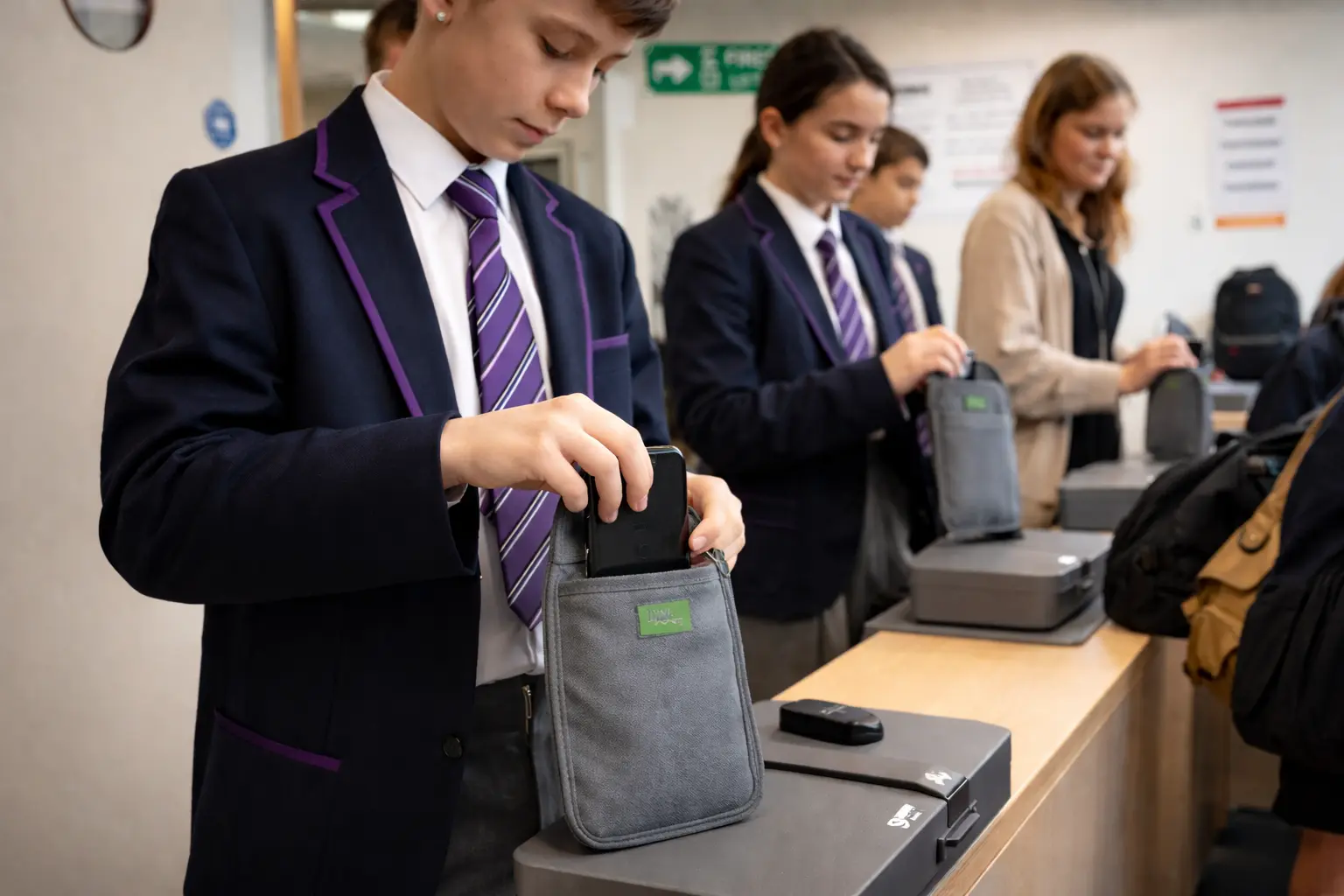
Not all schools are taking the same route. Some rely on “no see, no hear” rules, where phones must stay in bags and are confiscated if spotted. Others are investing in lockers or lockable pouches that pupils keep with them but cannot open until the end of the day.
Each approach comes with challenges. Enforcement takes time, consistency, and parental support. Where policies work best, schools are clear, firm, and fair — and parents understand why the rules exist.
Parents’ biggest concern: safety
For many families, the hardest part of a school phone ban isn’t learning time — it’s safety. Parents want children to have phones for travelling to and from school, checking in if plans change, or dealing with emergencies.
Schools are increasingly responding by allowing phones to be brought onto the premises but not used during the day. This balance reassures parents while still protecting learning and wellbeing.
Some families are also exploring alternatives, such as basic phones or separate tracking devices, to meet safety needs without full smartphone access.
Preparing children for a digital world — without handing it all over
One common worry is that banning phones ignores the reality of modern life. Children do need digital skills, and technology isn’t going away. But many educators argue that learning how to use technology wisely doesn’t require unrestricted access all day, every day.
Instead, schools can teach digital literacy deliberately — through structured lessons, shared devices, and clear guidance — rather than letting smartphones quietly shape behaviour in the background.
So, should phones be in schools?
There’s growing agreement on one point: smartphones and learning don’t mix well. While opinions differ on whether bans should be legal requirements or school-led decisions, the direction of travel is clear. Schools are being encouraged — and increasingly expected — to be phone-free by default.
For parents, this moment offers something important: relief from feeling like the “bad guy” at home. When schools set clear boundaries, children know the rules apply to everyone.
The bigger challenge now is what happens outside the school gates. Phones, social media, and online pressures don’t disappear at 3:30pm. But if schools can give children six calm, focused hours a day without constant connectivity, that may be a powerful place to start.