
If you’ve ever stood proudly at the back of a primary school hall during a nativity or carol concert, you’ll know how naturally singing seems to belong in early school life. In primary schools, children sing together regularly — in assemblies, classrooms, and performances — with little self-consciousness and lots of enthusiasm.
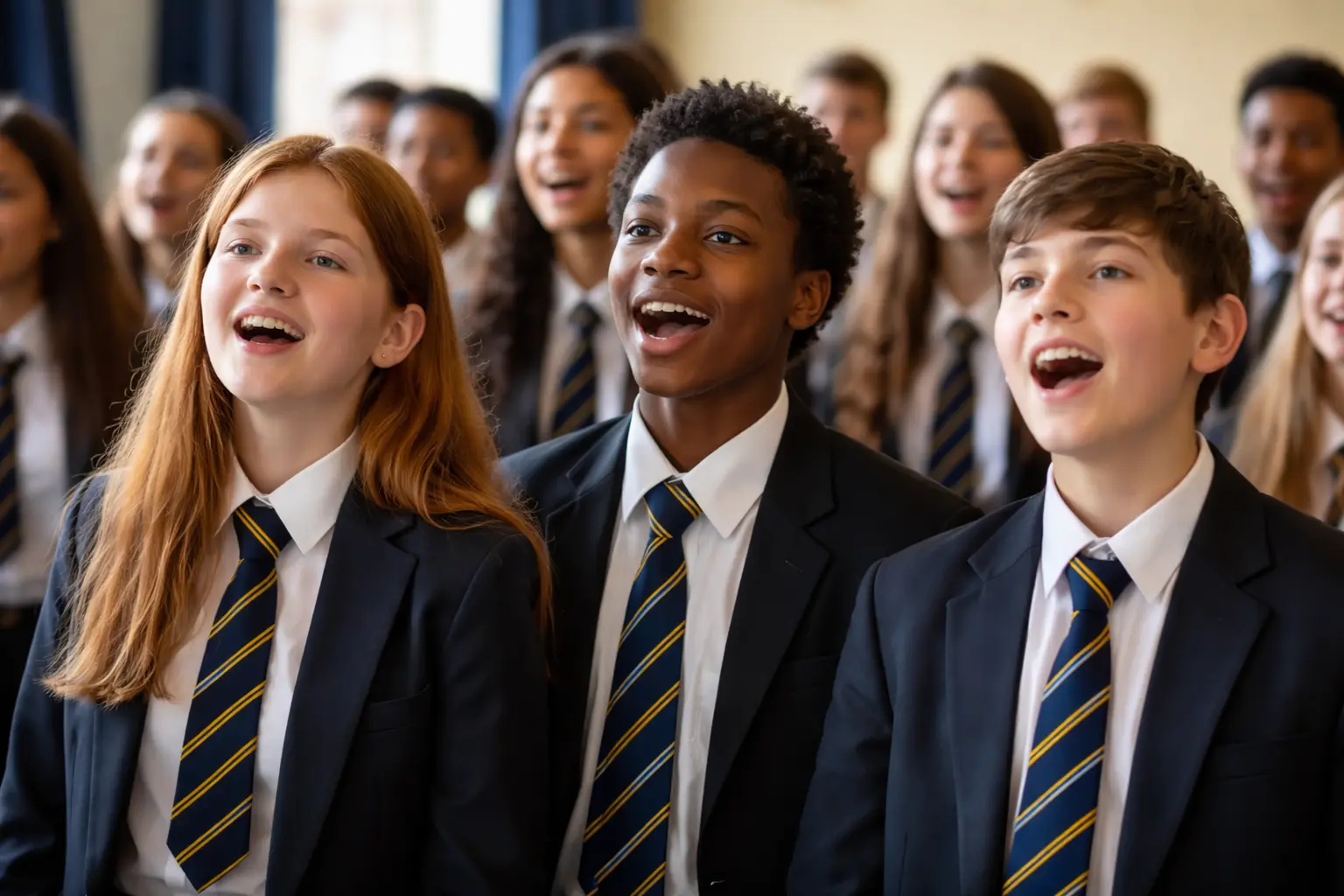
Yet something changes as children move into secondary school. Singing becomes optional, rarer, and for many young people, something they quietly leave behind altogether.
So why does this happen — and should parents be concerned?
Singing in Primary School: Part of Everyday Learning
In primary education, singing is woven into the school day. It supports:
- Language development
- Memory and concentration
- Confidence and self-expression
- A sense of belonging
Children sing together without worrying about how they sound. The focus isn’t performance — it’s participation.
What Changes in Secondary School?
Recent surveys of teachers in England highlight a sharp drop in shared singing once pupils reach secondary school:
- Over half of state secondary schools never sing together in assembly
- More than a third of state secondaries have no choir at all
- By contrast, singing remains common in primary schools and private education
The reasons are complex, but teachers point to a few consistent themes.
1. Fear of Embarrassment
Adolescence brings heightened self-awareness. Many pupils worry about being judged by peers and feel singing is “uncool” or risky.
2. Increased Academic Pressure
As timetables become more exam-focused, creative subjects can be pushed aside in favour of those perceived as more “important”.
3. Choice Replaces Participation
In primary school, singing is something everyone does. In secondary school, it becomes optional — and many students simply opt out.
Why Singing Still Matters for Teenagers
Despite its decline, singing remains incredibly valuable for young people, particularly during the emotionally demanding secondary years.
Research and school leaders consistently highlight benefits including:
- Improved mental health and emotional wellbeing
- Greater confidence and social connection
- Strong links to academic achievement
- A powerful sense of community and belonging
Some schools are actively working to challenge the idea that singing “isn’t for everyone” by introducing choirs, gospel groups, music hubs, and even playing classical music between lessons.
For many pupils, these initiatives become safe spaces where creativity is encouraged and voices are valued.
GCSE Music and the Bigger Picture
Over the past 15 years, entries for GCSE Music have fallen by around 25%. While recent curriculum changes aim to rebalance the arts, access remains uneven — particularly in state schools.
This doesn’t mean your child has to take Music GCSE to benefit from singing. Informal choirs, group performances, and musical enrichment all play an important role, regardless of academic pathways.
What Can Parents Do?
As a parent, you have more influence than you might think.
- Encourage participation, not perfection
- Ask schools what musical opportunities are available
- Normalise singing at home — in the car, while cooking, or just for fun
- Celebrate effort and enjoyment rather than talent
One secondary school pupil summed it up beautifully:
“Whether you’re good or not — just sing.”
Finding the Confidence to Keep Singing
Stopping singing isn’t inevitable. When schools prioritise music — and when parents reinforce its value — young people are far more likely to keep engaging with it.
At a time when confidence, connection, and wellbeing matter more than ever, helping children hold onto their voice may be one of the most powerful gifts we can offer.